1Learning Outcomes
Translate between decimal numbers and two’s complement representations
Compare two’s complement to other signed and unsigned representations
🎥 Lecture Video
2Two’s Complement
Ones’ complement:
Problem: Negative mappings “overlap” with the positive ones, creating the two 0s.
The solution: Shift the negative mappings left by one.
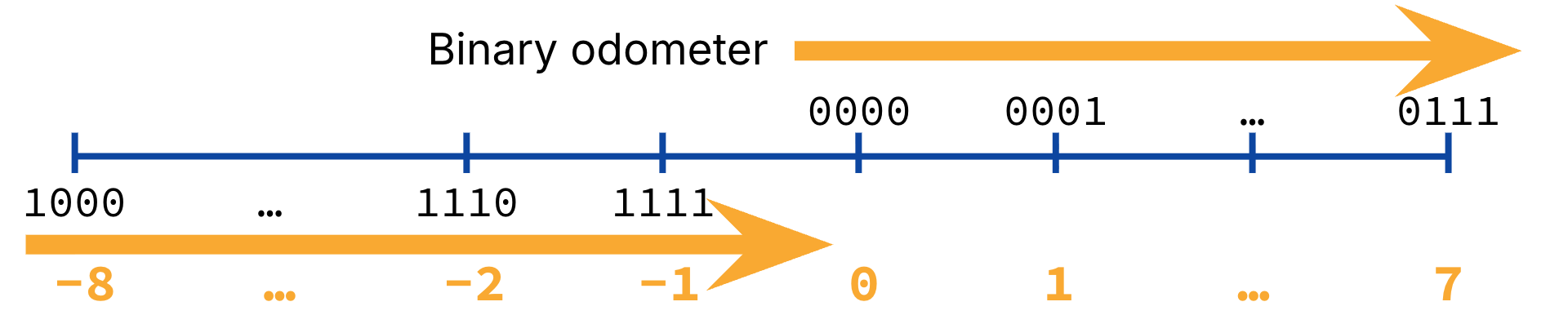
Figure 1:“Binary odometer” for 4-bit twos’ complement.
Of note:
Like in ones’ complement, incrementing the binary odometer corresponds with integer addition by one.
0b0000is still 0.Positive numbers are the same as ones’ complement.
Negative numbers are shifted over! For example,
0b1111now maps to -1. This gives us one extra negative number.The most significant bit (leftmost bit) can still be interpreted as the sign bit.
In Two’s Complement, a bit pattern of all ones is -1.
Show Answer
Zero: 1
Positive:
Negative:
3Arithmetic and conversion
Hardware for two’s complement is now simple.
Addition is exactly the same as with an unsigned number.
The numbers 5 and -5 are represented in 4-bit two’s complement with 0b0101 and 0b1011, respectively. Adding them together should result in 0, or 0b0000.
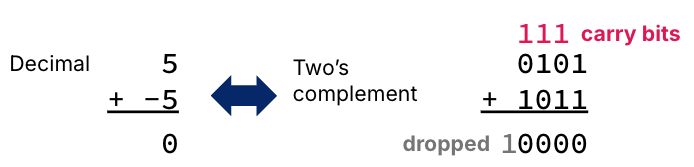
Figure 2:Addition in two’s complement follows the decimal intuition.
Explanation
Work right-to-left:
1+1=0carry11+0+1=0carry11+1+0=0carry11+0+1=0carry11(is truncated and dropped in 4-bit representation)
(Double check that binary math matches decimal math: )
4Formal definition
We can write the value of an -digit two’s complement number as
Positive and negative numbers can be computed using the same formula. Above, the sign is computed by multiplying the highest bit by .
Example: 5 and -5 in 4-bit two’s complement
5Two’s Complement: Flip sign
Hardware to convert positive to negative (& vice versa) is simple.
Complement all bits
Then add 1
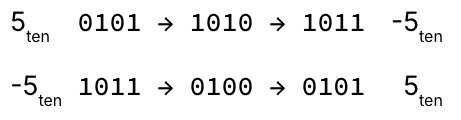
Figure 3:Two’s Complement: To change sign, flip the bits and add one.
At home: Prove algorithm is equivalent to formula!
The intuition comes from a “number wheel” representation of our binary odometer (Figure Figure 4). This wheel also helps us understand identify where integer overflow occurs:
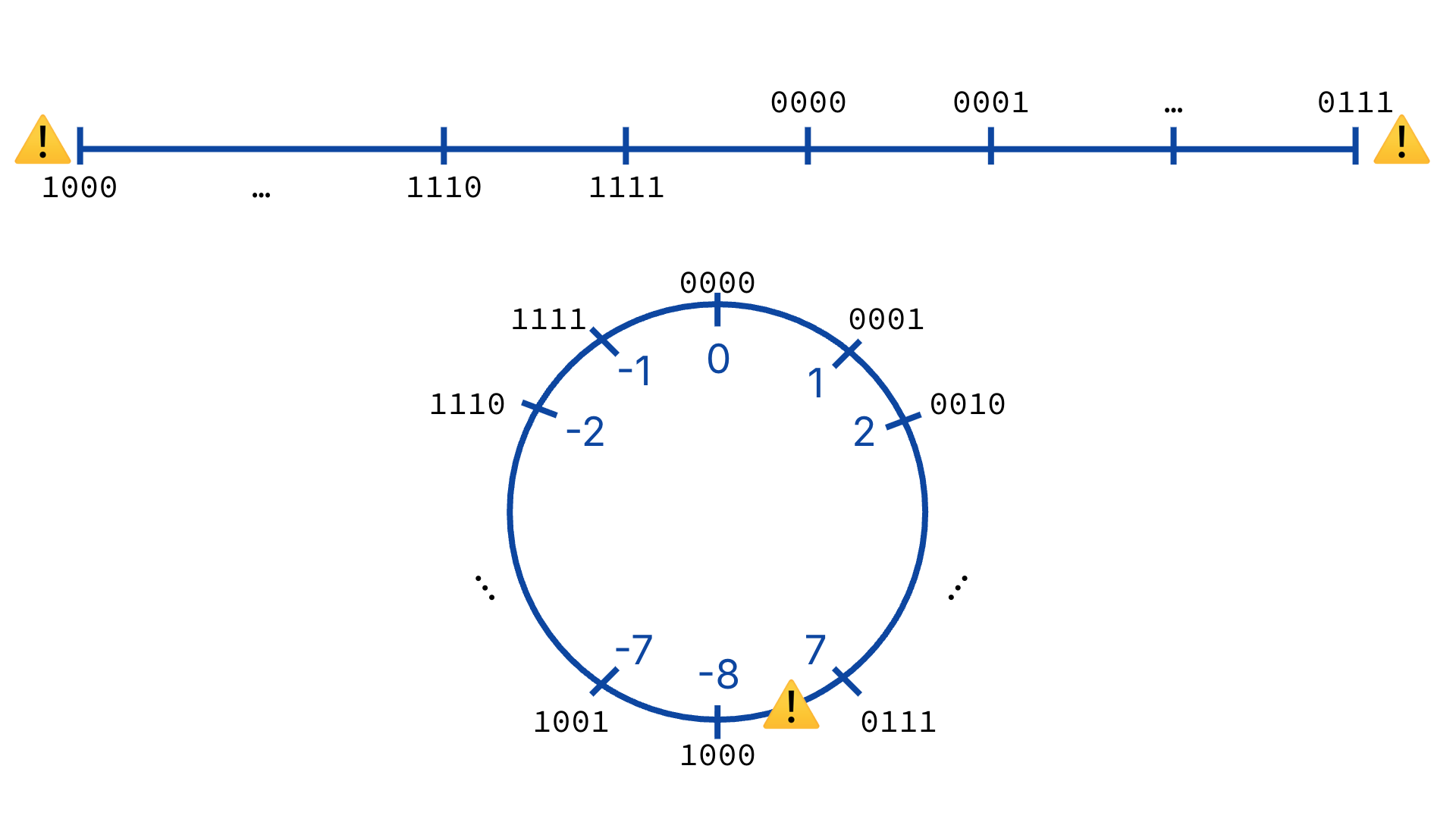
Figure 4:Top: A number line indicating where integer overflow occurs. Bottom: A number “wheel” indicating the same integer overflow location.
In Figure 4, 0 through 7 stays the same as it has for every representation. But then it jumps to -8. That cool top-level term (-8) pulls all negative numbers down by one so there is no overlap at zero.
6Two’s Complement: C standard (as of 2025)
Two’s complement is the C23 standard number representation for signed integers. Again, the built-in int is ambiguous because it does not specify bitwidth. And again, the header stdint.h accommodates typedefs like int8_t, int16_t, int32_t, etc., for signed integer representations.